Encounters
An area's encounter is the monsters keyed to it — what the party meets when they first walk in. Its card is one of the four in the area panel, reached the way stocking reaches all of them.
The encounter card
Each line names a monster and a count. Pick monsters through the type-ahead picker, which ranks the adventure's own bundled templates first, then this session's recent picks, then the shipped catalog in its own order — so a bespoke monster is always a keystroke away and a dangling id is never authored. Create monster… leaves the card for the monster editor with the create flow already open; the new template then ranks first in every picker. In a forge-backed project Create monster… opens the blocked-op dialog instead, which names detach as what unlocks the create flow.
A count is a fixed number or a dice expression: 4 for four orcs, 2d4 when you want the roll to happen at play time. Lines remove individually, and the last line can't go — an encounter with no monsters isn't a thing the model allows, so remove the encounter itself instead.
Three of the controls under the lines are pins — each one a choice to override what the engine would otherwise roll:
- Alignment fixes the spawn alignment for templates that offer more than one. The options offered are the intersection across the encounter's monsters, so a mixed group only offers alignments all of them can take.
- Stance pins the reaction outright — pick one and no reaction roll happens. Leave it at none for the ordinary rolled reaction.
- Aware means the monsters expect intruders. They never roll surprise.
Preview counts and XP samples the encounter — rolled counts, the resolved stat table, and per-sample XP — without committing anything. See authoring aids.
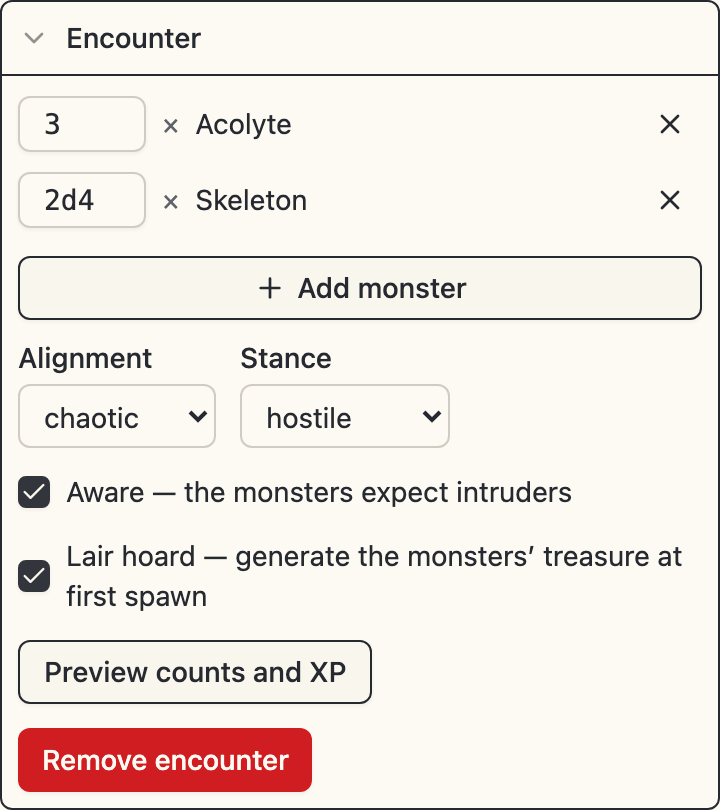
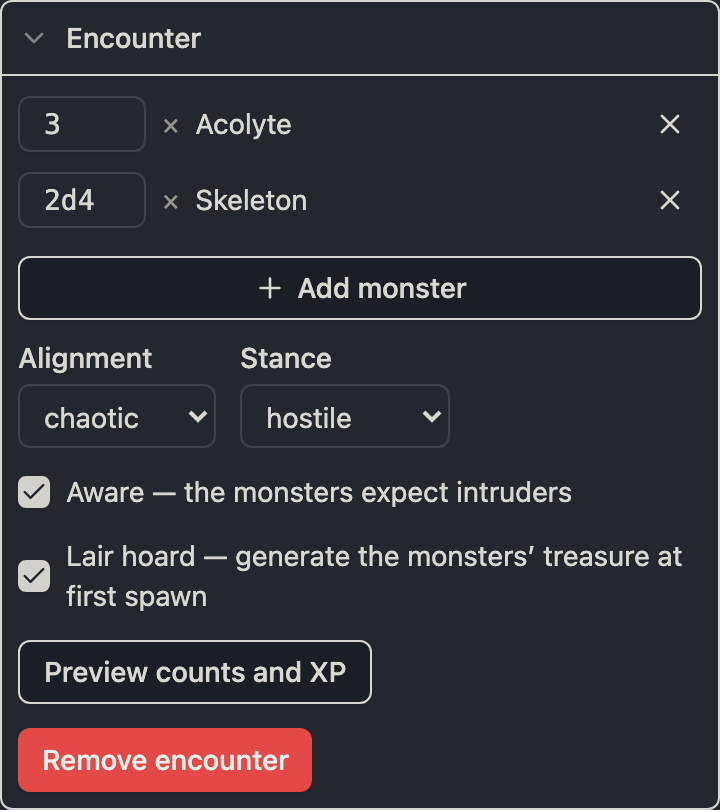
An acolyte takes any alignment and a skeleton only chaotic, so chaotic is the whole of what that pair's alignment select offers.
Where a monster's treasure comes from
Lair hoard is on by default, and it means the engine generates the keyed monsters' own treasure when it first spawns them. Key four orcs and you have keyed their type D hoard with them — you do not add a treasure card for it.
- The engine rolls once per encounter line, not per monster. It rolls type D once for one line of four orcs, and twice for two separate orc lines.
- Nothing lands in your document. The hoard is generated at play time and dropped on the area's first cell, so
adventure.jsonrecords the encounter and nothing else. The engine rolls the area's treasure card separately on first entry, which is why putting the monsters' own letters there would double the hoard. - Only lair treasure is gated by the checkbox. The engine generates what monsters carry individually, and what a group carries between them, at spawn either way — the toggle governs the lair cache alone.
- Some monsters have no lair treasure at all. Their type yields no hoard letters, so the engine has nothing to generate. SRD stocking reports this as a follow-up rather than quietly substituting an unguarded roll.
Untick it for the treasure-absent monster room: the SRD's stocking procedure puts treasure on only some monster rooms, and without the toggle a keyed encounter would always bring its letters along. That's exactly what Roll SRD stocking does when the dice give a room monsters but the treasure die fails.
Use the treasure card alongside an encounter only when the room holds something beyond what the monsters are guarding.
Wandering monsters
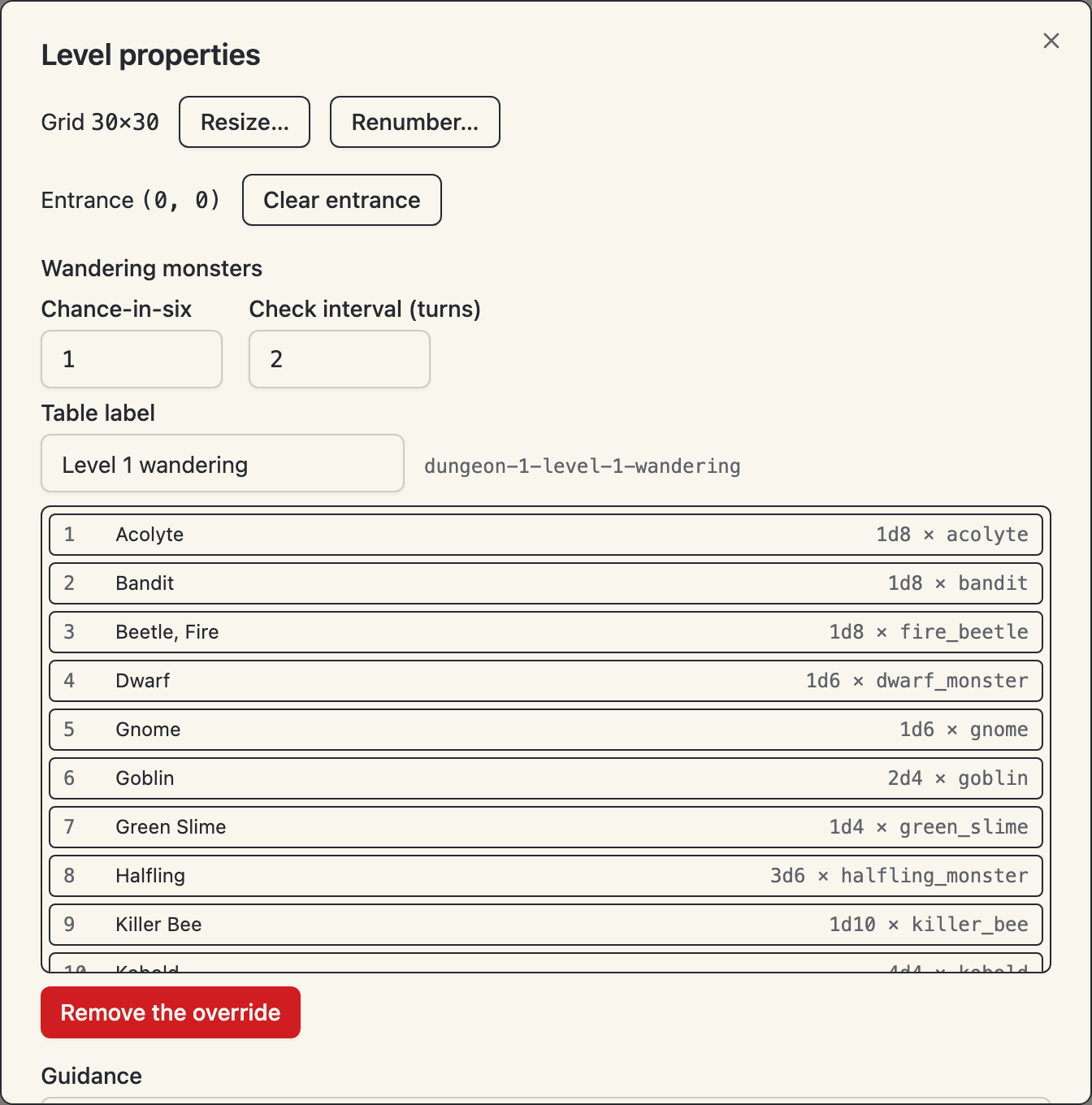
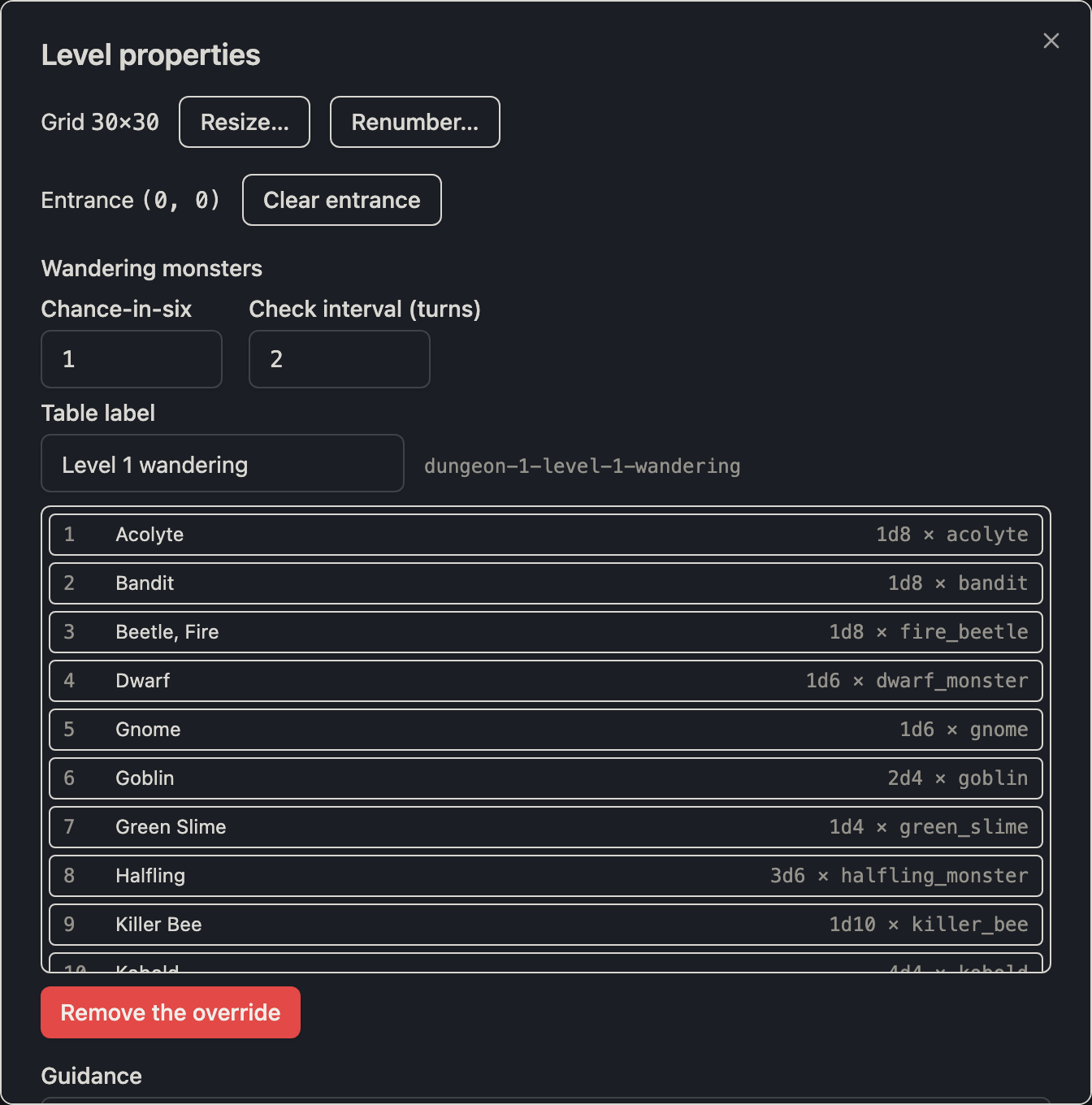
Not every encounter is keyed to a room. A level's wandering monsters are authored one level up, in the level properties dialog, which holds the inline d20 wandering-table editor seeded from osrlib's compiled level-band table — start from the book's table and bend it to the level. Each row names a monster and a count expression through the same pickers the cards use.